


Amniotic Band Syndrome
Amniotic band syndrome is a rare condition that occurs when fibrous bands of the amniotic sac (the lining inside the uterus that holds the fetus) get tangled around parts of the developing fetus. Amniotic band syndrome affects about one in every 10,000 to 15,000 pregnancies.
As amniotic bands may wrap around different fetal organs, mainly limbs, and the umbilical cord, amniotic band syndrome can lead to a variety of congenital anomalies. This includes, but is not limited, to constriction rings around fingers or toes, in utero (before birth) amputation or fusion of digits or limbs at different levels, and, in extreme cases, intrauterine fetal death. The anomaly is also associated with premature rupture of membranes and preterm delivery. Amniotic band syndrome's severity depends on the degree of constriction and the affected body part.
Why Choose US
Education Experience
I earned my MD in Surgery from Huazhong University of Science and Technology in Wuhan, China, in 2003. Later, I completed my PhD at Katholieke Universiteit Leuven in Belgium in 2008.
Professional Experience
I am currently an Associate Professor and Chief Physician of Hand Surgery at Wuhan Union Medical College Hospital. I supervise master's students and serve on the editorial boards of several journals, including the Chinese Journal of Experimental Surgery, the Journal of Foot and Ankle Surgery, and the Chinese Journal of Microsurgery.
Expertise
My expertise includes performing syndactyly release using the Pelnac artificial dermal substitute, which eliminates the need for skin grafting. This work was published in the Journal of Plastic, Reconstructive & Aesthetic Surgery in September 2023.

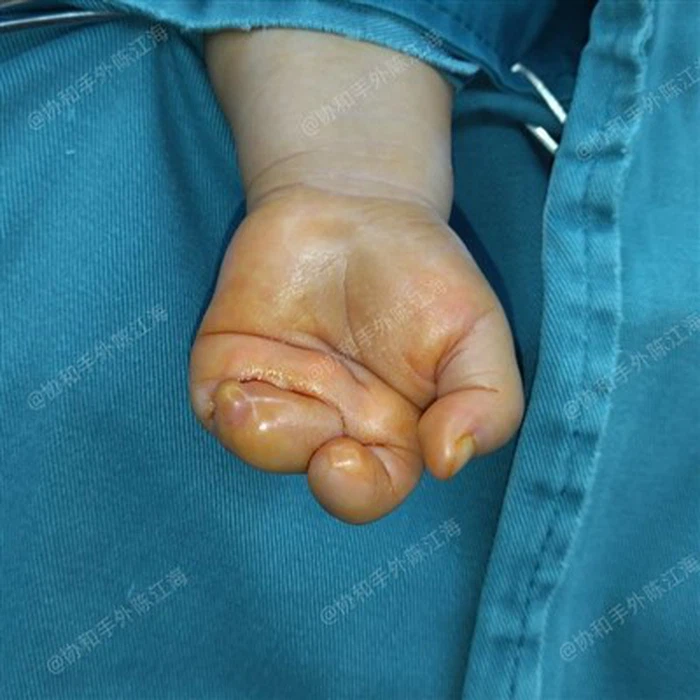
The presence and severity of birth defects depend on where the amniotic bands are located and how tightly they are wrapped. The bands most commonly constrict the limbs, fingers and toes. They can also wrap around the fetus's head, neck, umbilical cord or vital organs.
Some babies may only have a skin indentation. Others may be born with clubbed feet, fused fingers or toes, a cleft palate or other physical deformities. In the most serious cases, severe constriction can cause congenital amputation (missing limbs) or a blocked blood supply. This can be fatal.
The cause of ABS is not known, but researchers do not think it is genetic. It usually happens when the lining of the amniotic sac is torn during pregnancy.
ABS is usually diagnosed at birth since the amniotic bands are hard to see on a routine ultrasound. In some cases, however, abnormalities, such as limb malformations, can be seen. If your doctor suspects ABS, they may refer you to a fetal center for more advanced testing and care.
Other diagnostic tests may include:
Anatomy ultrasound - to confirm the diagnosis, determine where the bands are located and evaluate blood flow
MRI - to assess severity of constriction and abnormalities
Fetal echocardiogram - to look at the baby's heart structure and function
These procedures provide more detailed images and information about your baby's condition.
How Is Amniotic Band Syndrome Monitored and Treated
Once ABS is diagnosed, your doctors will closely monitor your pregnancy, as well as your baby's growth and development. Regular ultrasounds will help find changes, risks and possible problems so you and your medical team can develop a plan of care.
Mild birth defects may not need treatment. Some babies will need medical or surgical treatment. This is usually done after the baby is born.
Treatments after the baby is born include (postnatal):
Surgery - Babies may need surgery right after delivery or later in life. When needed, emergency surgery is done to release the constricting bands. Plastic and reconstructive surgery to fix deformities may not be done for months or even years. This gives the baby time to grow.
Physical or Occupational Therapy - Some infants will rehabilitative therapies to increase strength and function. The type of therapy depends on the type of birth defect.
Prosthetics - Children who have lost a limb may get a prothesis. A prosthesis is an artificial device to replace a missing body part. 3-D printing and other technology have vastly improved these devices. They help children regain limb function as early as 12 to 18 months of age.
Sometimes, however, ABS causes severe or life-threatening damage that must be addressed before the baby is born. For example, an amniotic band may be wrapped around the umbilical cord or is cutting off the blood supply to a limb. In these cases, fetal surgery may be an option.
A minimally invasive procedure called fetoscopic amniotic band resection is commonly done when in-utero intervention is needed. With the help of ultrasound-guided imaging, a specialized surgeon uses a tiny instrument (with a camera on the tip) to reach the fetus through the mother's abdomen. The surgeon then cuts the band or bands to release constriction and prevent further harm, such as loss of life or limbs.
It is important, however, to make an informed decision and consider that this surgery carries serious risks. These risks include premature delivery, bleeding and damage to the fetus.
Amniotic band syndrome can vary in its presentation, and the severity of symptoms can differ from one individual to another. From the maternal perspective, it will usually be asymptomatic. Some fetal symptoms and presentation of amniotic band syndrome include:
Limb abnormalities
Constriction rings or grooves around fingers, toes, arms, or legs
Missing fingers, toes, or parts of limbs
Clubbed foot or other limb deformities
Facial deformities
Organ damage: Rarely, bands may cause damage to internal organs, potentially leading to issues such as gastrointestinal or genitourinary abnormalities.
Swelling or edema in the areas affected by the constricting bands.
Restricted blood flow caused by bands wrapping the umbilical cord.
How Is Amniotic Band Syndrome Treated
A healthcare provider usually diagnoses ABS soon after birth. Sometimes a provider diagnoses ABS prenatally, when the fetus is still in your uterus. An ultrasound may reveal lines from the tightened bands of tissue. More often, the ultrasound shows missing limbs or body parts that aren't developing correctly. Signs of ABS are usually visible as early as 12 weeks into a pregnancy.
The affected body parts and functions determine the treatment for ABS. Mild cases of ABS may only need careful monitoring by a healthcare provider. But severe ABS that affects organ function needs immediate treatment.
Sometimes surgery can correct issues such as club foot, cleft lip and palate or webbing. Infants or children with missing or shortened limbs may benefit from prosthetics (artificial body parts). Physical therapy and occupational therapy can help them use the prosthetic and improve their overall function.
In rare cases, a healthcare provider may remove amniotic banding with surgery when the fetus is still in your uterus. This procedure carries serious health risks for the birthing parent and fetus. It's usually only for constriction bands that threaten the fetus.
The treatment options for amniotic band syndrome include in utero fetal surgery and postnatal repair of the resulting abnormalities.
Fetal surgery: The goal of fetal surgery is to release the constriction caused by the amniotic band before it can cause further damage. This is done by operative fetoscopy, which allows the direct visualization of the amniotic band and its release using various surgical techniques. The success of fetal surgery depends on the degree of damage that has been caused by the amniotic band. If the distal part of the extremity is swollen, releasing the band allows the swelling to resolve and normal development to continue. If the constriction has been more severe, release of the band can stop further damage and prevent amputation of the affected extremity.
Treatment after birth consists of plastic and reconstructive surgery, followed by physical and occupational therapy as required by the type of deformity. Prosthetics may also be recommended for children suffering from loss of limbs or limb functionality. Advances in 3-D printing have led to the creation of more functional prostheses for these patients.
What to Expect During Surgery
Treatment for amniotic band syndrome will be custom-made for your baby and how the bands affect them.
If the bands are shallow and don't cause any symptoms or health problems, your baby may not need any treatment. Even so, surgery may be an option to give the affected body part a more typical look.
Some babies need surgery to correct or prevent problems caused by the bands. The main concerns are that bands can reduce blood and lymph flow or press on nerves.
Surgery to Release Bands
If an amniotic band constricts a baby's tissues, doctors perform surgery to release the band. The surgery requires careful work around the baby's blood vessels and nerves. The exact method the surgeon uses will depend on details of your baby's bands, like the number of bands, where they are and how deep and close they are.
Typically, the surgeon makes cuts (incisions) in the skin along the band. The surgeon removes extra or fragile skin that went down into the crease in your baby's soft tissue.
Next, the surgeon makes zigzag cuts in your baby's skin above and below the band. This is called Z-plasty. It creates pointed flaps of skin. Then the surgeon gives a more normal contour to your baby's soft tissue under the skin.
Finally, the surgeon brings the pointed flaps of skin together from above and below the band and closes the incisions. The zigzag method helps prevent scars that could restrict the tissue later. The doctor will want your child to come back for follow-up visits to make sure they are healing well.
Surgery timing
The timing of surgery depends on the effects of the bands. Usually, surgery happens after a baby is at least 6 months old and often when they are at least 1 year old. Very rarely, babies need surgery in the days right after birth.
Your baby may need urgent surgery right after birth if:
Bands press deeply on blood vessels or nerves
Bands cause serious swelling (lymphedema) or other problems
Most of the time, surgery for amniotic bands is done as day surgery. Based on how your baby is affected, they may need more than 1 surgery.
Fetoscopic release of amniotic bands
Fetoscopic release is a minimally invasive procedure to release amniotic bands during pregnancy. This can be done after 16 weeks if the bands are severe. The fetal intervention provider inserts a fetoscope (a tiny tube with a camera on the end) into the womb to see the bands and then loosen them with small scissors or laser energy.
Children's Maternal Fetal Intervention and Surgery Program provides this highly specialized procedure. If your baby is diagnosed before birth, our team can talk with you about your baby's condition, the treatment options, the risks and benefits of releasing bands before birth or waiting and what to expect.
Other Treatments
Other treatments will depend on your baby's needs. They may include:
Surgery to move affected bones into a better position (realignment surgery)
Clothes that apply pressure to control swelling (compression garments)
Tools that help your child do things on their own (adaptive equipment)
Prosthetics to replace missing body parts
If your baby has another condition linked to amniotic band syndrome, like syndactyly or clubfoot, they may need surgery or other treatment for this condition too.
FAQ
With professional doctor and specialist, we provide professional amniotic band syndrome surgery treatment. Contact us for more hospital information.