


What is Cleft hand malformation?
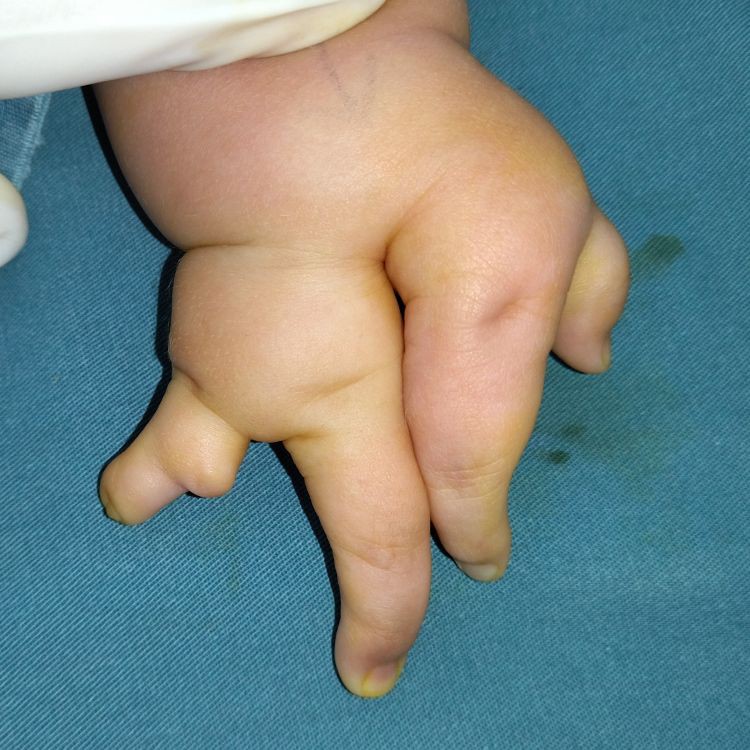
Cleft hand malformation is a rare congenital condition that often features a partial split in the fingers and palm, creating two sections on either side. Many cases involve missing or reduced fingers, with X-rays showing extra bones crossing the cleft. The causes are not well understood but may include environmental factors, prenatal medication, genetics, and chromosomal issues. This condition results from incomplete development of the central part of the hand during fetal growth. A common sign is the absence of the middle finger and underdeveloped or missing third metacarpal bone. Its prevalence is between 0.011‰ and 0.04‰.
Characteristics of Cleft Hand Malformation
- Appearance Varies: Not all cleft hands look the same.
- Central Defect: Often, the central part of the hand lacks one or more fingers.
- V-shaped Cleft: A V-shaped cleft is common in this area.
- Less Common Sites: Rarely, the cleft appears on the thumb or little finger side.
Isolated Incidents
- Most Cases: For many children, the condition only affects the hands.
- Other Differences: Doctors will check for other differences or syndromes.
- Associated Conditions: This includes cleft feet, cleft lip, and cleft palate.
Surgical Considerations
Not Always Necessary: Not all children with cleft hands need surgery.
Severity Matters: Surgery often depends on the severity and functionality of the hand.
Functional or Aesthetic Issues: If severe, surgery may be recommended.
Surgical Options
Variety of Choices: Many different surgical options exist for repairing a cleft hand.
Timing Varies: The timing and sequence of surgeries differ per child.
First Surgery Age: Typically, the first surgery is performed around the age of one.
Goals of Surgery
Close Cleft: Ensure effective hand use post-surgery.
Thumb-Finger Space: Create space for fine motor functions.
Skin and Soft Tissue Realignment: Reorganize tissues around fingers.
Bone Stabilization: Stabilize or reposition bones.
Correct Deformities: Address any finger or thumb deformities.
Post-Surgery Care
Cast Wear: Post-surgery involves wearing a long arm cast for four to six weeks.
Splint Use: After cast removal, wear splints at night for weeks.
Scar Management: Helps maintain alignment and reduce scarring.
Occupational Therapy: Enhances flexibility and proper hand function.
Regular Check-ups: Doctors monitor progress throughout treatment.
Surgical Treatment of Cleft Hand
- Complexity Varies: Unlike cleft foot surgery, cleft hand surgery varies greatly.
- Anatomical Structure Matters: The approach depends on the underlying anatomy.
- Thumb Function: Smaller first web space can limit thumb movement and leverage.
- Surgical Goal: Divide the cleft to improve function.
- Incision Path: Surgeons cut from the cleft around the index finger to the first web space.
- Skin Flap Use: Use half of the ulnar side flap to deepen the first web space.
- Functional Space: Create a wider, more functional space between thumb and index finger.
- Customized Details: Each surgery is unique based on the deformity presented.
- Procedures Involved: May include soft tissue release, transfer, and metacarpal osteotomy for better alignment.


Hot Tags: cleft hand surgery, China cleft hand surgery doctor


