


This baby was born with synpolydactyly in both hands. Both hands had six fingers, with several fingers fused together. The condition was inherited from his mother, who had surgery when she was a child. Unfortunately, her surgical outcome was not ideal, and she developed finger contractures after surgery.
Because of the mother's experience, the family was particularly cautious about choosing treatment for their child. They consulted doctors at several hospitals before eventually finding me and deciding to proceed with surgery.

Left Hand: Before and After Surgery
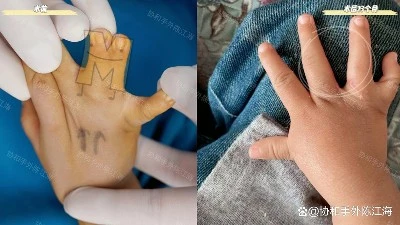
Right Hand: Before and After Surgery
At 2 years and 4 months old, we performed bilateral synpolydactyly separation and extra-digit removal in a single surgery, using an artificial-dermis technique without skin grafting.
Now, more than one year after surgery, the child's hands have recovered well. He has already started kindergarten. Playing games, doing crafts, and holding a pen to write are all unaffected, and he uses both hands very flexibly.
Because of the mother's previous experience, the family had several important questions about the surgery.
Would skin need to be taken from another part of the child's body?
The mother had undergone traditional skin grafting as a child, and the procedure left scars on another part of her body. So she was particularly concerned about whether her child would also need to have skin taken from another part of the body to cover the hand.
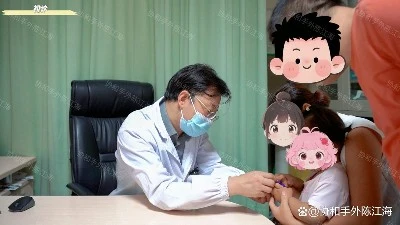
Initial Consultation
Actually, it was not necessary.
In this case, there would indeed be some skin defects after separating the fingers. However, we could first use some of the skin from the extra fingers that were going to be removed to help cover the defects.
For areas that still could not be covered, we used artificial dermis.
The artificial dermis helps guide the child's own surrounding skin to gradually grow toward the center and eventually cover the wound.
This avoids the additional trauma of harvesting skin and means no additional donor-site scar is created elsewhere on the child's body.
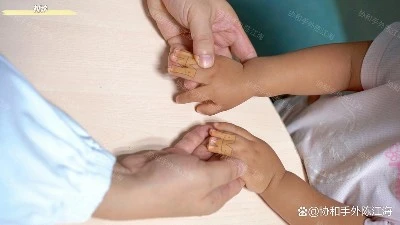
Initial Consultation
2. How can we prevent the problems that happened to the mother?
The mother's fingers currently cannot fully straighten. This is related to postoperative web-space contracture and scar adhesions, and she was very worried that her child might experience the same problem.
First, we need to understand why this can happen.
After synpolydactyly separation, the skin folds around the web spaces and the bases of the fingers are still healing. If there is significant scar formation or insufficient stretching, the newly separated web spaces can gradually contract and migrate, and in some cases the fingers may even become partially re-adhered.
This can create an appearance that resembles recurrent syndactyly and is a recognized postoperative complication.

The mother's hand
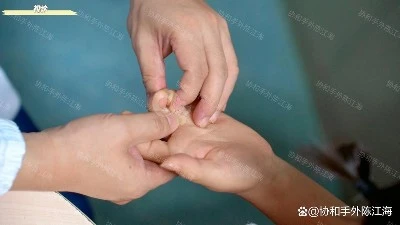
The mother's hand
So how can we reduce this risk as much as possible?
Surgery alone is not enough. Postoperative rehabilitation is just as important as the surgery itself. We ask parents to focus on three things.
First, consistently guide the child through active and passive functional exercises, including grasping, opposition, and finger extension.
Second, the child should wear a nighttime splint. Nighttime is an important period for preventing scar contracture, so the splint helps keep the fingers and web spaces adequately separated and continuously counteracts scar contraction.
Third, parents should continue using scar-treatment medication.
All three are essential, and they require a great deal of patience and consistency from the parents.
3. The mother understood that surgery is only the beginning
Many parents think that everything is finished once the surgery is over. But this mother understood that the real work begins after surgery.
Once the wounds had healed, she did not let her guard down. She performed functional exercises with her child every day, made sure the child wore the splint at night, and applied scar medication consistently. She also adjusted the exercises and care according to how the child was progressing.
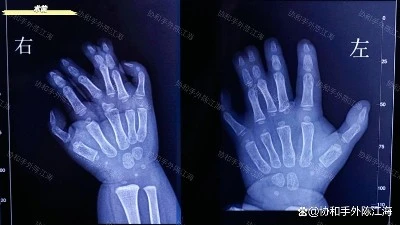
术Preoperative X-rays of both hands
4. With careful postoperative care, the child now uses both hands very well
At the 3-month follow-up, we found that the scars were not deep, there was no web-space migration, and there was no significant scar hyperplasia.
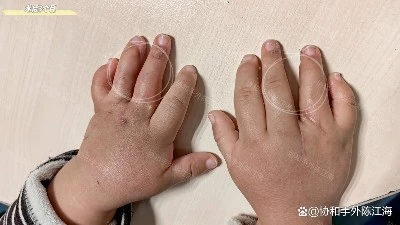
3 Months After Surgery
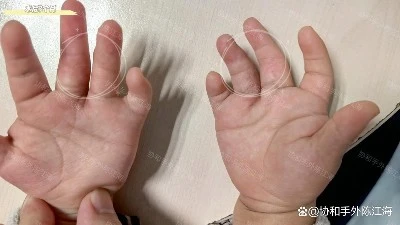
3 Months After Surgery
After returning home, the family followed our instructions carefully and carried out each part of the rehabilitation plan. The mother, in particular, was extremely consistent with the daily care.
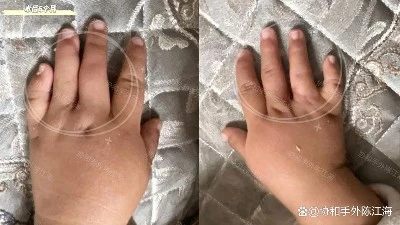
6 Months After Surgery
Now, the child's hands have recovered well both in appearance and function.
There are still some scars on both hands, but compared with the mother's hands, they are much less noticeable. The child's hand function is also very good, with a good range of motion and no obvious finger deviation.
We recommend that the family continue with the current rehabilitation program. Hopefully, when they return for their next follow-up, the child's hands will have grown even larger, stronger, and more natural-looking.