


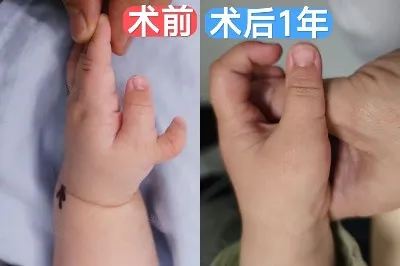
This is the baby's left hand before surgery-it had an extra thumb. On the right is the left hand after surgery. The extra digit has been removed, along with the long-standing worry in the mother's heart.
When the baby was born, no one expected this situation. The whole family felt anxious and began searching everywhere for information. They also saw many similar cases online. Since they lived close to Wuhan, they came right away.
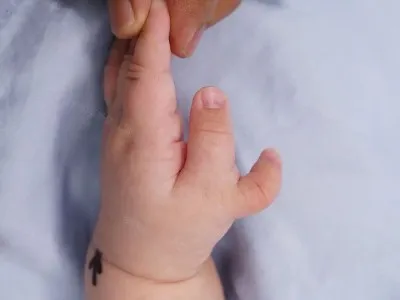
At the first consultation, the baby was only 3 months old. Besides the extra thumb, there was already a noticeable inward deviation, so the parents were eager to proceed with surgery as early as possible. Generally, for this type of polydactyly surgery, once the baby is about 6 months old, weighs around 6 kg, and is in good health, the operation can be performed.
This case was not very complicated, but it wasn't just about removing the extra thumb. Because of the inward deviation, corrective repair and adjustment were also needed during surgery to widen the thumb–index web space. Otherwise, it could affect both appearance and some function.
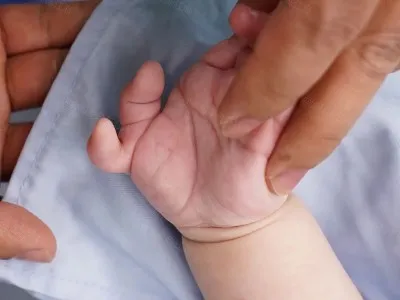
The mother noticed that the left thumb seemed smaller than the right and worried that the difference would increase over time. In fact, with proper post-operative functional training, the thumb will continue to grow. Activity and use stimulate growth, so parents are encouraged to guide the baby to use the left hand more. Over time, the left thumb gradually catches up, and the difference usually becomes minimal, without affecting normal function. The key lies in consistent rehabilitation exercises.
100 points-very satisfied!
At 6 months old, the baby successfully underwent surgery. Both hands now have five fingers. During recovery, the parents followed medical instructions and consistently trained the thumb. At the first follow-up, the baby showed very good progress.
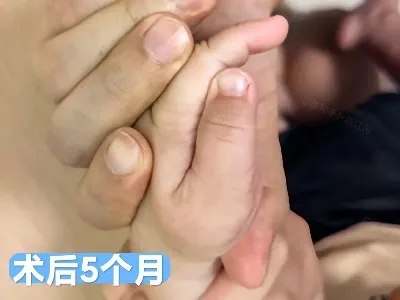
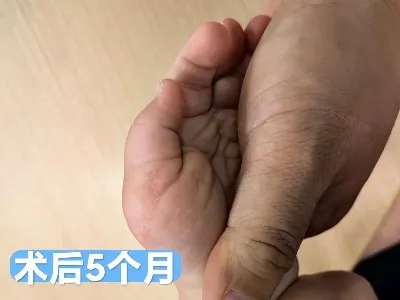
Five months after surgery, the child's grasping posture and alignment were very good. The baby could actively grasp toys. At this stage, parents no longer needed to passively press the thumb, but they were advised to play more two-handed games with the child, guiding proper grasping posture. Scar treatment and brace use also needed to continue.
One year after surgery, at the second follow-up, the scar had faded significantly. The thumb looked good-well-shaped, straighter, and had grown.
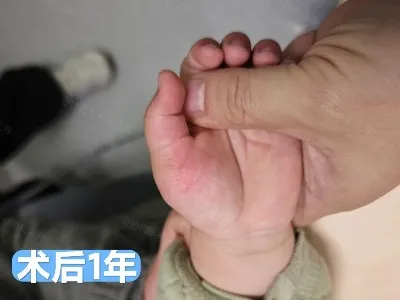
Compared to the first follow-up, the child was also more cooperative, showing that the parents had consistently followed medical advice. The child had adapted well and would continue to cooperate with exercises. When comparing both thumbs, the difference had become very small. This had been the mother's main concern, but thanks to consistent training, the thumb developed quickly. As the child grows, the difference will become almost unnoticeable.
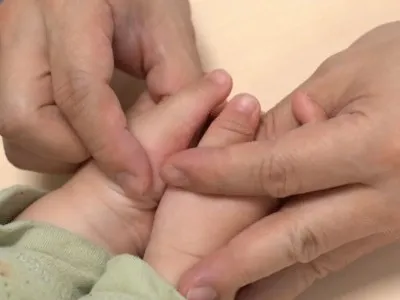
Now the mother feels reassured. When the child starts school, there will be no need to worry about being different from other children. With such a good recovery, regular follow-ups are no longer necessary. Functionally, both hands work well, and cosmetically, there are no obvious signs. The whole family is very satisfied.
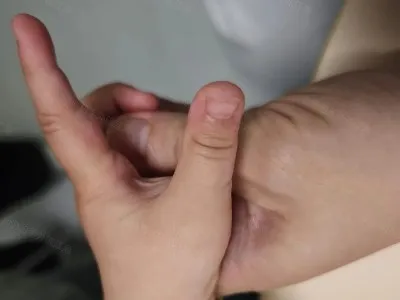
At the end of the follow-up, I asked the mother:
"If you were to rate your child's thumb now, in terms of appearance and function, what score would you give?""100 points! Very satisfied!"
Of course, a score is subjective-but a parent's satisfaction is the most genuine measure. And we hope every child can move forward in life with that "perfect score" of love and confidence.