


Conjoined Fingers/Toes (Syndactyly) is a relatively common condition, but this baby's case is quite rare, with conjoined fingers on both hands (3rd and 4th) and additional conjoined toes on the right foot. When the child was over 2 years old, we performed a surgery using artificial dermis to induce skin regeneration, avoiding skin grafts, to separate the fingers and toes. Upon follow-up, the child's hands and feet were in good overall condition, with shallow scars, and good strength and mobility.
The parents were initially unsure about whether to do the surgeries all at once or not.
They felt conflicted: they wanted to complete everything in one go but were worried about the long surgery duration and the difficulty of post-surgery care.
Based on our experience, our conclusion is that, if possible, it's better to complete the surgeries all at once. In my opinion, there are several benefits to performing the surgeries in one session:
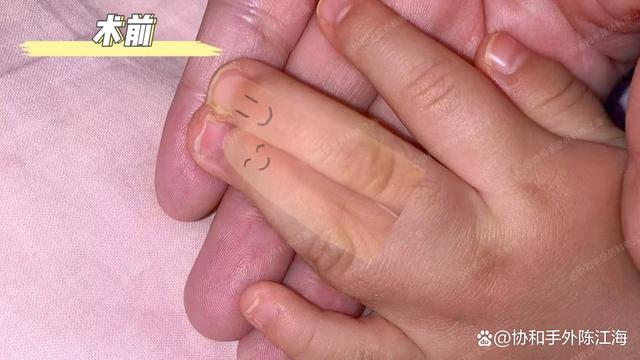
Left hand before surgery

Right hand before surgery
1. Shortens recovery time: If each hand and foot is done separately, though each surgery may be shorter, the overall recovery cycle will be longer.
2. Reduces time commitment for parents: Since the child needs to go through surgery, parents need to travel back and forth, which affects their work. Reducing the number of surgeries helps minimize the time spent on this.
3. Lowers surgery risks: From a medical perspective, completing the surgeries in one session reduces the total surgery time, minimizes the number of anesthetics, and lowers the risk associated with multiple surgeries.
4. Reduces costs: The cost of one surgery is lower than the total cost of several separate procedures.
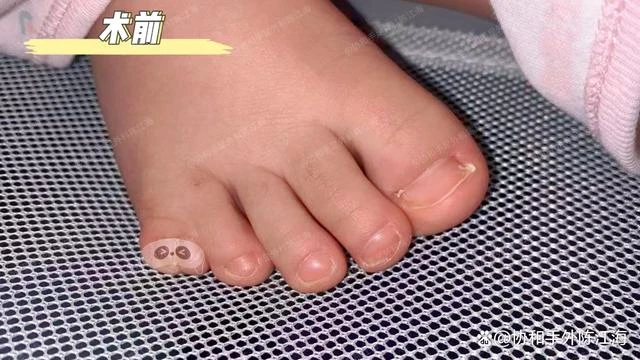
Right foot before surgery
Criteria for One Surgery
For syndactyly surgery, the child needs to be at least 6 months old, weigh 6 kg, and have a normal cardiac ultrasound to undergo the procedure.
This child is now over 2 years old, weighs more than 6 kg, and has a normal cardiac ultrasound, making the child for the surgery, which will take about four hours.
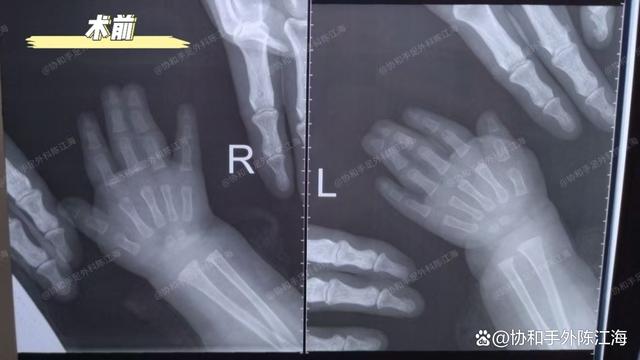
X-ray of both hands before surgery
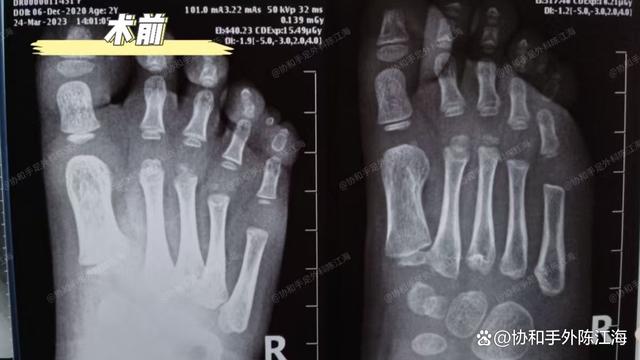
X-ray of the right foot before surgery
What is Artificial Dermis?
Besides the number of surgeries, the parents were also interested in the method used to cover the skin defects.After separating the digits, skin defects often occur. Currently, there are two common ways to address this:
1. Skin grafting: A portion of skin is taken from the child's body and grafted onto the area. If successful, the recovery will be faster, but there is a risk that the graft might not take, and some parents are reluctant to add more scars.
2. Artificial dermis (temporary skin substitute): This is a collagen-based material that acts as a scaffold, covering the wound and encouraging skin growth. After the new skin fully regenerates, the artificial dermis will naturally fall off. This method doesn't stay in the body, so there is no concern about rejection, but it takes 4-6 weeks for the skin to fully regenerate, requiring more effort for dressing changes.
After learning about both options, the parents chose the artificial dermis method.
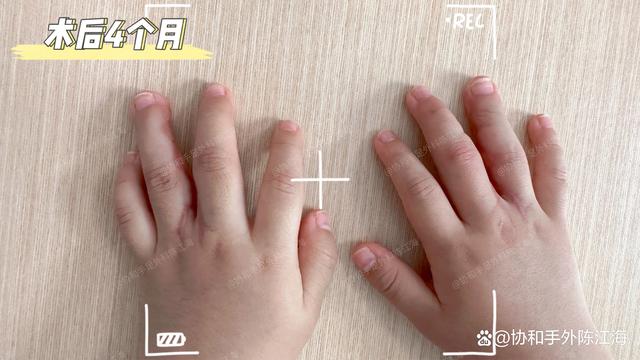
Follow-up After Surgery
After the wounds healed, the next step was functional rehabilitation.
After syndactyly surgery, especially for the hands, the child needs to perform flexion and extension exercises during the day and wear braces to keep the fingers in an extended position at night to prevent scar contracture.
Additionally, scar-reducing medications need to be applied, and close monitoring is essential to intervene if any abnormalities occur.
This child's recovery process was relatively smooth, with the parents following through with wound care, brace, scar treatment, and functional exercises.
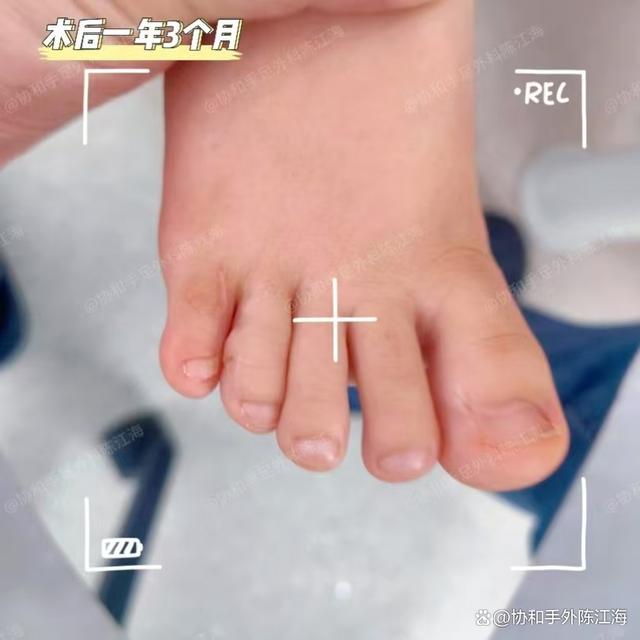
15-Month Follow-up
Now, after 15 months, the child's grip strength is good, with no significant flexion contracture or deviation. The scars are shallow.
Overall, the appearance and function of the hands and feet have improved significantly. However, we must continue using night splints, scar treatment, and functional exercises to ensure further progress.Over time, the child's hands and feet will continue to improve.